
 Por Ismael Buendia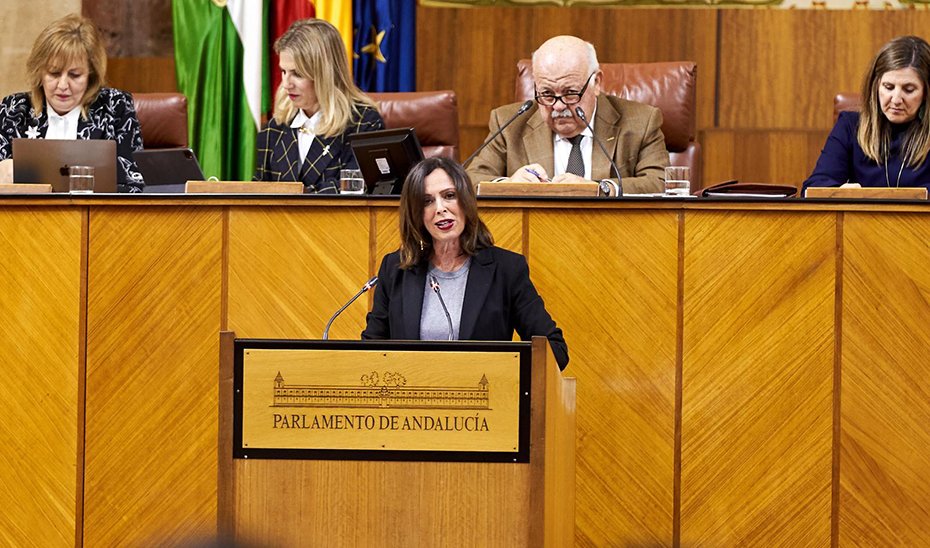
The Andalusian Parliament has ratified the urgent decree-law on housing measures, which aims to increase the supply with 20,000 new protected homes in five years. The Minister of Development, Territorial Articulation and Housing, Rocío Díaz, reported in the Plenary on a shock plan «made with dialogue, consensus, and a lot of effort», while calling on municipalities to adhere to measures that «facilitate and expedite the development of urbanized land to promote the construction of protected housing.»
Rocío Díaz has stated that housing «is one of the great challenges of our time» and, in the current situation, the Andalusian Government has opted for management through a decree-law that aims to «increase the supply of affordable housing and ensure access for those who need it most». In this regard, she lamented that the housing problem has worsened «due to a Housing Law from the central government that has brought about a collapse in the real estate market, with less supply, less investment, and less security for owners and tenants.» «Never before has so much harm been done to housing,» she emphasized.
In the face of this scenario, the minister pointed out that the decree-law «addresses the current challenges in housing» with «effective solutions» that will be included in the future Andalusian Housing Law, such as seeking alternatives to address the lack of available land for protected housing. At this point, Rocío Díaz highlighted «the key role of municipalities» in urban planning, providing them with tools «to use all vacant land for residential purposes and adapt it to the needs of their population with full legal guarantees.»
To achieve this, the development of urbanized land for immediate use for the construction of protected housing has been facilitated and expedited. Thus, a series of regulatory changes have been introduced to allow land or buildings currently used for tourist accommodation or offices to be allocated for protected housing. It will also be possible to permanently allocate private or public land without a specific purpose for protected rental housing. The Minister of Development clarified that these regulations will not apply to educational or health-related plots.
Additionally, the decree-law will allow plots of free housing to increase the density of homes by 20% and their proportional buildability if designated for official protection. There will also be advantages for protected housing plots, which can increase the density of homes by 20% and buildability by 10%.
The minister reiterated that the collaboration and involvement of municipalities will be necessary for implementation, and they must adhere to these land-related measures through a municipal agreement within one year of the decree-law coming into force. Specific deadlines will also be set for the construction of homes: two years to apply for a construction permit and three years for completion.
Municipalities will also play a significant role in another key measure of the decree-law, which is «the creation of a Land Bank for Affordable Housing, providing greater transparency on available land and reinforcing public-private collaboration,» as stated by the minister. In the initial phase, municipalities with over 100,000 inhabitants will participate, with three months to provide the necessary information and available land. From there, six months are set for the publication of the land bank, which will then be expanded and completed with data provided by the rest of the Andalusian municipalities.
Rocío Díaz also mentioned other significant measures, such as the inclusion of a more streamlined procedure for selecting housing beneficiaries through specific calls, aiming to expedite the allocation process. Andalusia will become «the first region to implement the new Next Generation repayable funds, facilitating the construction of affordable rental housing.»
Another novelty is the inclusion of housing projects in the Project Acceleration Unit, which will «halve the construction time for protected housing.» The conditions for this include residential projects of at least 250 protected homes or over 500 homes with the corresponding land reserve for protected housing and additional sustainable urban development measures. This inclusion in the Project Acceleration Unit must be accompanied by the commitment of the municipality to expedite all relevant procedures.
Finally, the Minister of Development noted that the decree-law expands the income limits to qualify for protected housing under general or limited schemes to ensure that more families unable to access the free housing market can access protected housing, as well as the revision of territorial coefficients to facilitate the construction of more protected housing.
Rocío Díaz defended that these measures stem «from dialogue and efficiency» and represent a further step in the housing policy change initiated in 2019. Since then, the Andalusian Government «has tripled the promotion of protected housing in Andalusia» and has implemented measures that had not been applied before, such as the «processing of €311 million in grants for 154 affordable rental housing developments.» Furthermore, the Ministry of Development has focused on residential rehabilitation through programs like the Ecovivienda Plan and has strengthened protection for vulnerable groups. «This government has done the most to ensure access to housing in Andalusia,» added the minister, who advocated for «real measures that will bring real results.»