
 Por Ismael Buendia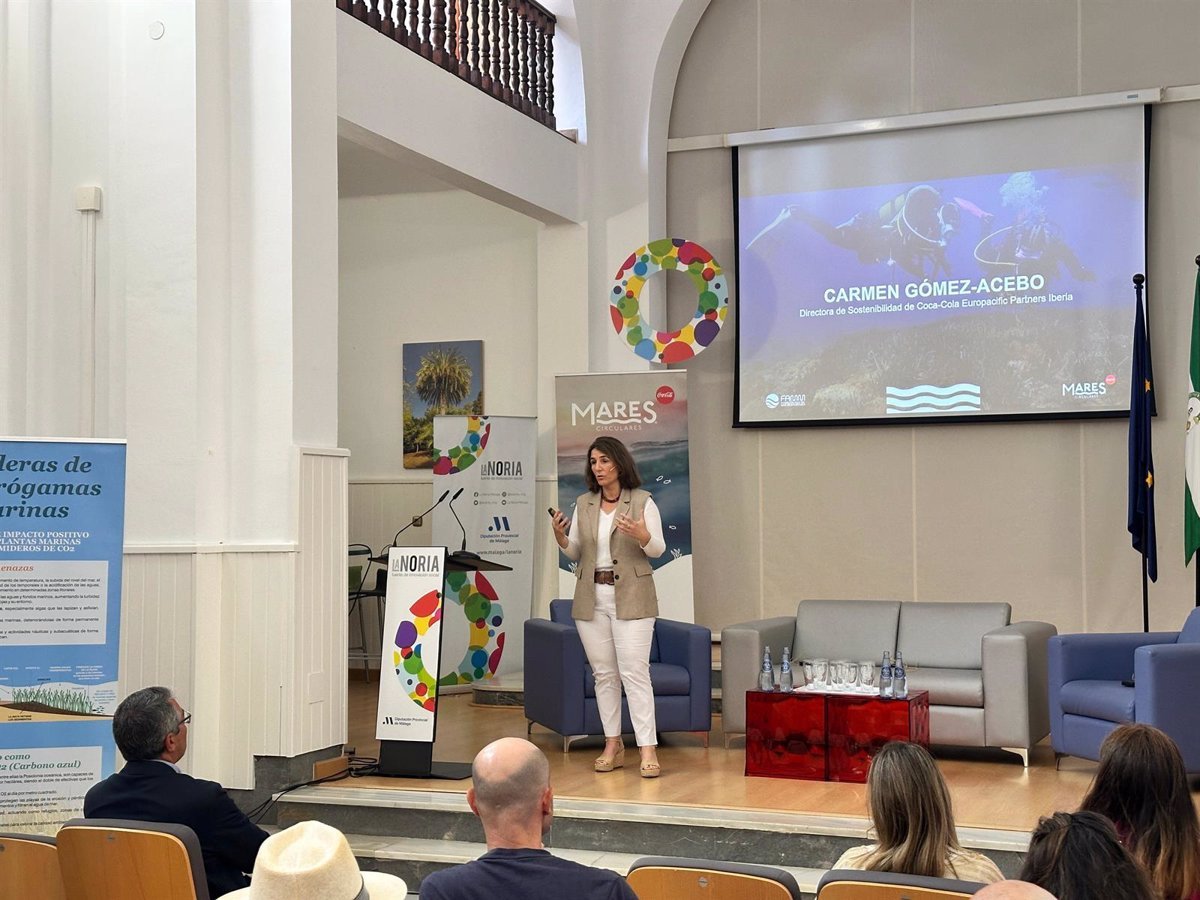
A study by the Aula del Mar Foundation and Coca-Cola Circular Seas analyzes the state of seagrass meadows on the coast
The study of «sunken forests» carried out by the Mediterranean classor (FAMM) and Coca-Cola Circular Seas shows the need to take urgent measures to preserve the scientific name of oceanic posidonia on the Mediterranean coasts.
After a challenging investigation into the preservation of this plant in the Andalusian provinces of Málaga, Granada, and Almería, it was observed that the majority in Málaga are in unfavorable or even critical condition and are being replaced by invasive Asian algae.
The presentation in Málaga was attended by the President of Málaga Diputacia, Francisco Salado; Director of Coca-Cola Europacific Partners Iberia, Carmen Gomez-Accebo; and the President and Scientific Director of the Mediterranean Classor, Juan Antonio López, among others.
The study concludes that the presence of invasive species, along with habitat deterioration due to human activities and increasing temperatures, makes it essential to take urgent measures to prevent the last remaining bastions of posidonia in this area from disappearing, thereby affecting all the associated biodiversity they harbor.
Therefore, FAMM, hand in hand with Circular Seas, the project for the protection and preservation of aquatic environments and biodiversity, as well as promoting the circular economy promoted by Coca-Cola, will launch a pilot project to replant Posidonia in the city of Malaga in Marbella.
A marine plant is required for the ecosystem
Oceanic posidonia meadows are essential for the marine ecosystem due to their ability to sequester carbon. They also provide habitat for numerous marine species, using it for reproduction and shelter. However, they are threatened by human activities such as trawling, anchoring, and ship scuffing, as well as invasive species and increasing temperatures due to climate change.
The study conducted in 2024 analyzes eight sites on the coasts of the provinces of Málaga (five), Granada (one), and Almería (two). A collaboration involving over 150 volunteer divers.
Guidelines from the University of Malaga (UMA) and the Board of Directors involve analyzing various biological and ecological indicators, including measuring meadow coverage, density and length of plant shoots, and the presence of associated and invasive species.
The study concludes that the state of posidonia in the Alboran Sea shows significant variability, with better conditions in the eastern regions. Around Cabo Ready, the meadows exhibited a healthier state, with densities and heights indicating good conservation.
In contrast, those in Málaga (EstePona and Nerja) showed a critical condition, affected by invasive algae displacing oceanic posidonia. The presence of Asian algae creates an alarming situation, as competition for light and space drastically reduces meadow density, threatening their disappearance.
In Granada, although in better condition than those in Málaga, it also faces significant pressure from Asian algae, with invasive coverage exceeding 30%.
Position
The Director of Sustainability for Europacific partners at Coca-Cola, Iberia, Carmen Gómez-Acebo, stated: «Understanding the current state of oceanic posidonia in the Mediterranean is crucial for taking short-term conservation measures and, therefore,»
«Given the study results, the need to implement conservation and restoration measures for the most degraded meadows and avoid actions that could further modify and degrade their condition. Therefore, through Circular Seas, we aim to continue contributing to the protection and conservation of marine biodiversity along our coasts,» she added.
The President and Scientific Director of the Mediterranean Classor, Juan Antonio López, expressed: «Posidonia is synonymous with the Mediterranean, it is ‘its submerged forest,’ the largest bastion and symbol of the environment. He also mentioned that in Malaga, according to studies by the Board of Directors, up to 60% of Posidonia has been lost in a decade.
«Humans are the main causes, but we can also be their main hope for recovery. With this project, we want to appreciate posidonia and propose protection and restoration measures. We still have time,» he added.
In his speech, the President of Málaga Diputacia, Francisco Salado, emphasized the value of the marine ecosystems of the Costa del Sol and their relationship with the blue economy and sustainable tourism.
He stated that the Costa del Sol is «a territory with a valuable marine ecosystem, a local economy revolving around the sea, and a province deeply committed to preserving its natural environment.»
He recalled working on a sustainability-based strategy through tourism on the Costa del Sol, with tools such as zero carbon footprint to measure, reduce, and offset environmental impact; sustainable territory delegation, with citizen awareness and programs like Málaga Viva; and projects like The Blue Path.
Tables
In one of the round tables, Gabriel Soler, director of the Littoral Ecology Institute of the Valencian Community, mentioned that the evolution of large meadows has been studied for 25 years in his region, and for the most part, they are stabilizing and tending to expand.
He also added that in the few areas where there is regression, it is due to ship trawling and the accumulation of discharges on the seabed.
In the same forum, Paqui Benguel Diver emphasized the need for divers to practice good underwater practices that respect the environment to continue enjoying «a unique visual and educational experience.»
And Manuel Merchán, director of the Chelonia Association and a professor at the Autonomous University of Madrid, stressed the importance of marine education and outreach: «What is not known cannot be preserved,» he said, appreciating marine resources, which are vital.
Preservation Actions
In addition to the aforementioned replantation project, volunteer work, training, and awareness of posidonia ecosystems are being implemented on the coast of Mijas (Málaga).
FAMM and Circular MAS plan to continue in 2025 with the collection work in the meadows. In fact, eleven dives are planned, three more than last year (six in Málaga, three in Almería, and two in Granada) throughout the year.
Another action planned for 2025 is the expansion of the aquariums located in the blue economy classroom that FAMM has at the Social Innovation Center in Málaga, Noria, to use a larger amount of posidonia as substitutes.